
Stanley Donwood
無意識から浮かび上がるもの
What Emerges from the Unconscious
無意識から浮かび上がるもの
What Emerges from the Unconscious
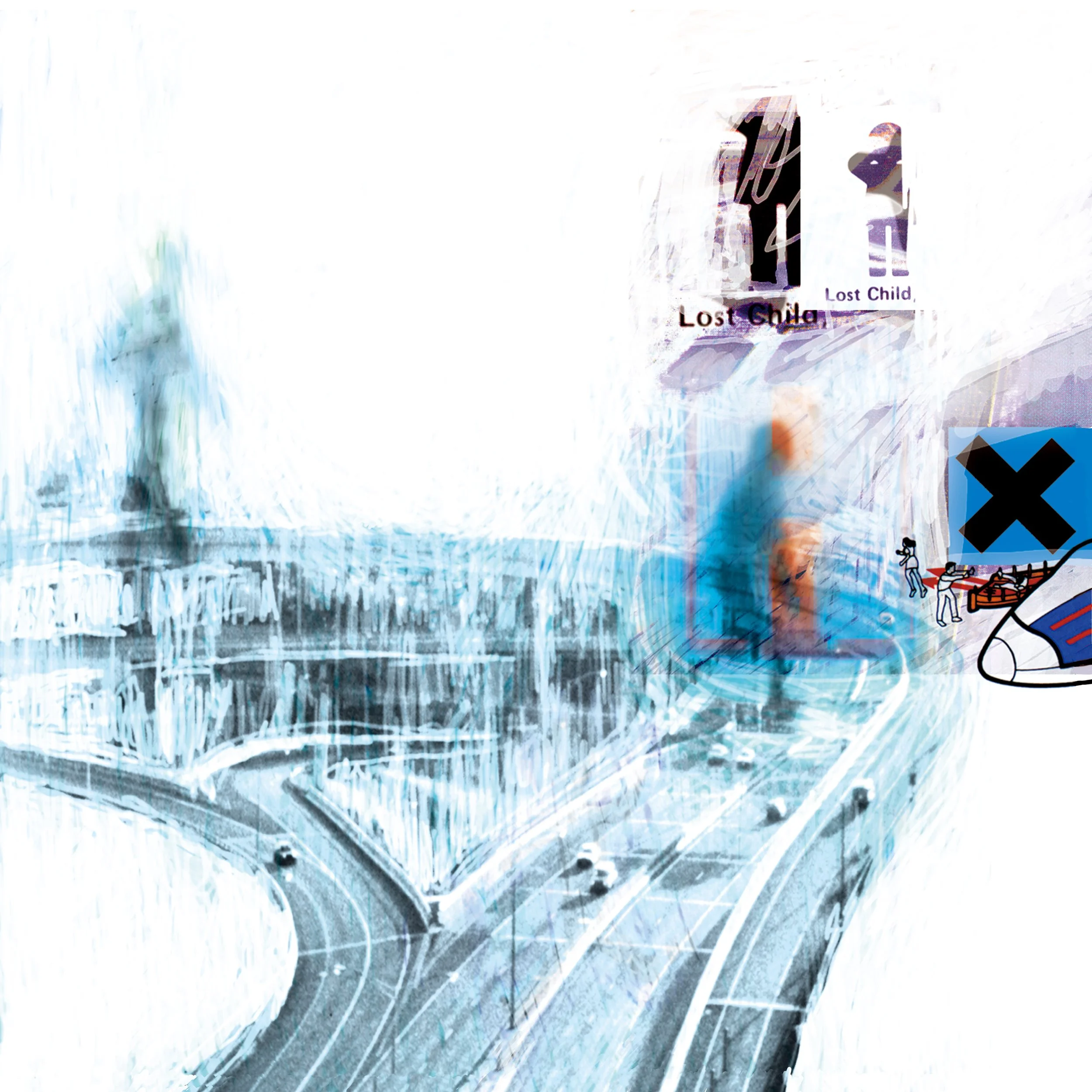
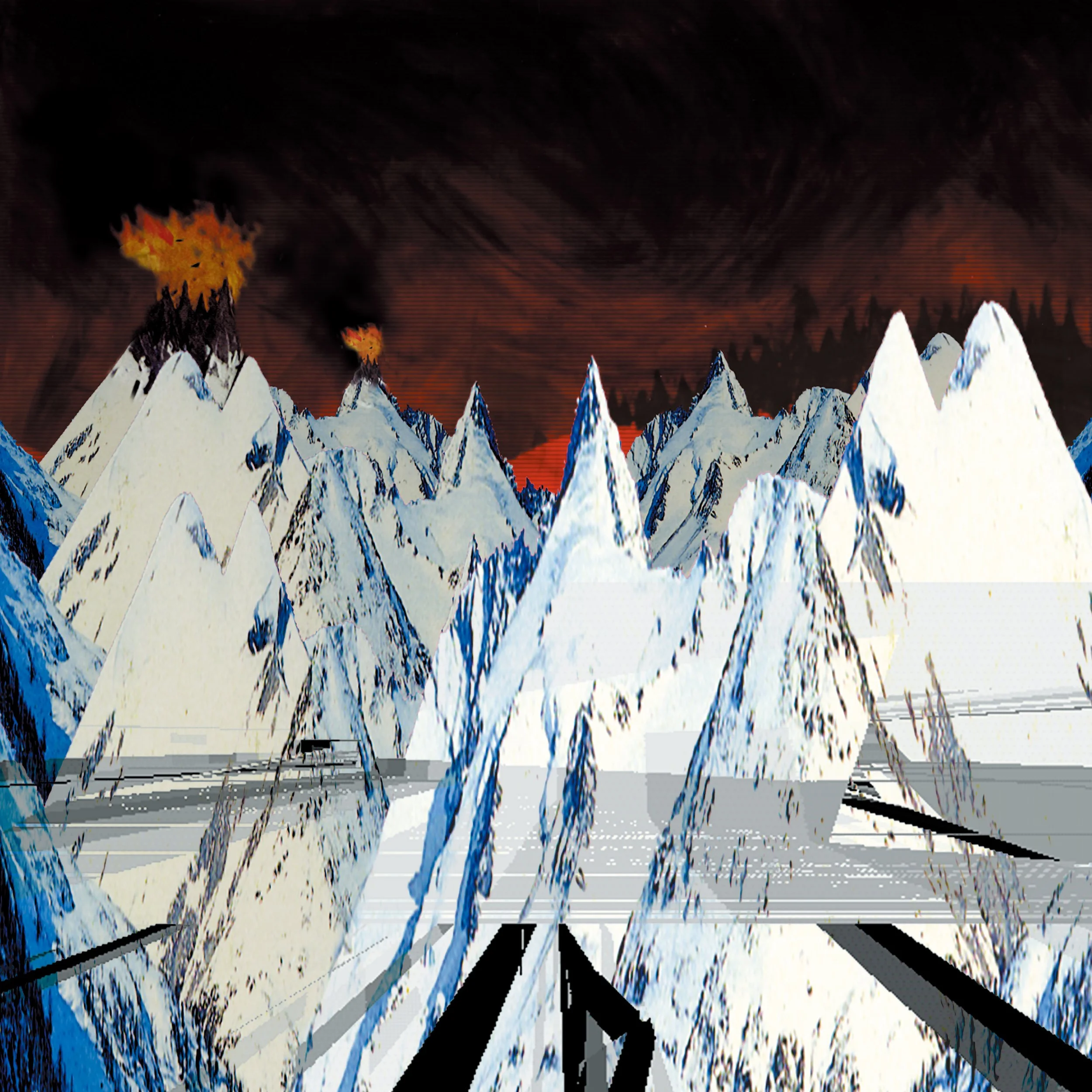
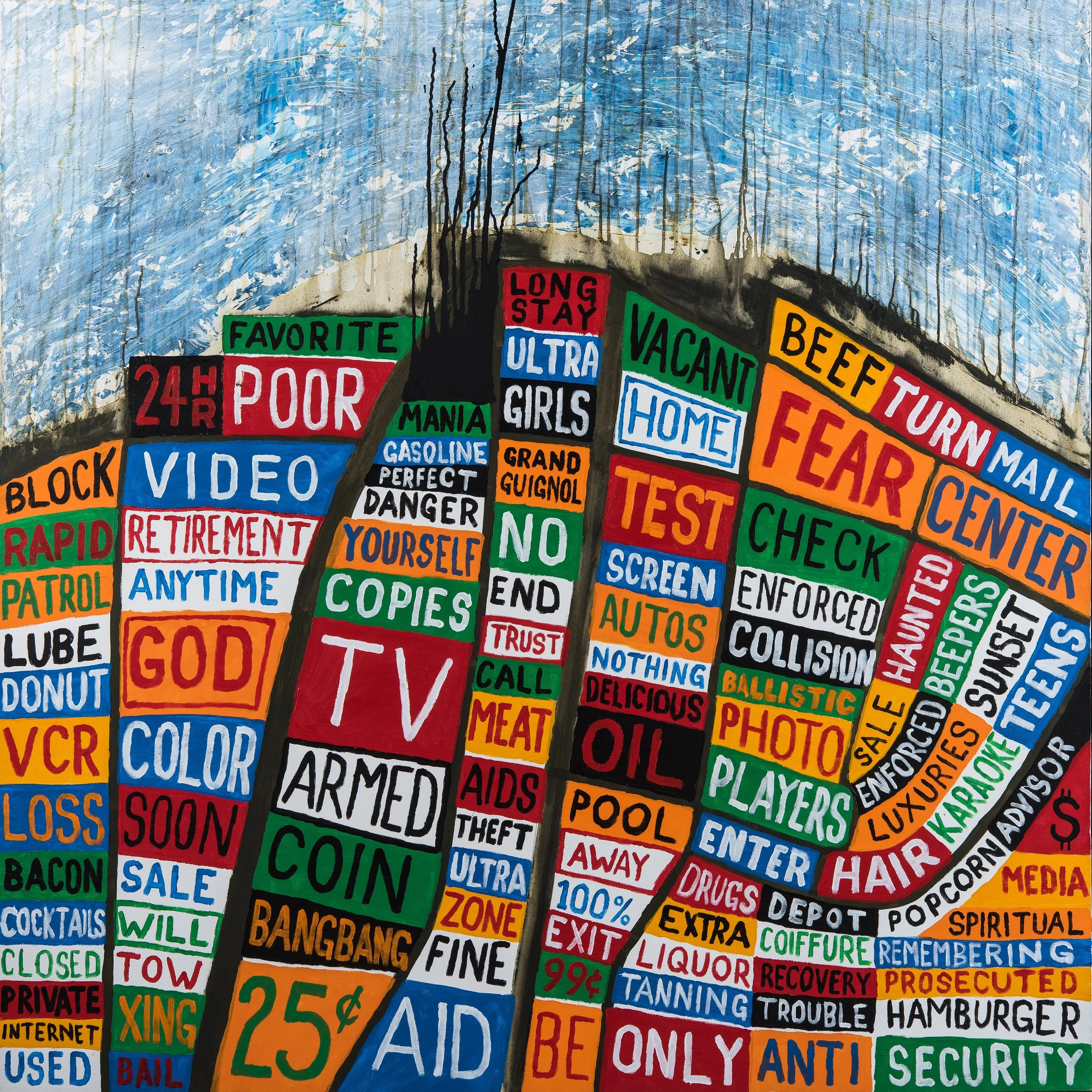
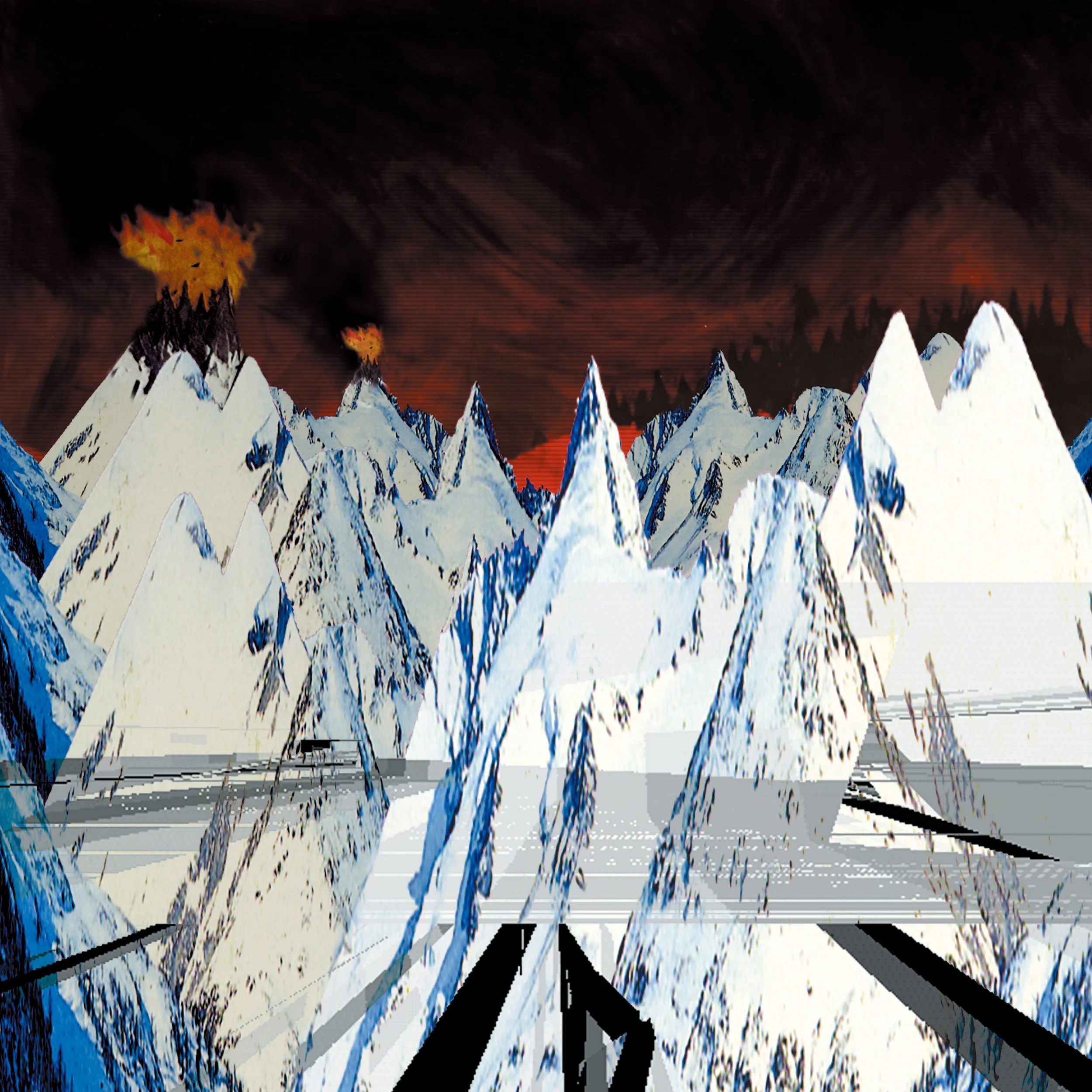
1: OK Computer, 1996
2: This Might Be a Cover, 2000
3: Pacific Coast, 2003
2ndアルバム『The Bends』以降、Radioheadのアルバムのアートワークを手がけてきたStanley Donwood。Thom Yorkeとは大学時代からの友人で、一度はそれぞれの道を歩んでいたものの、Radioheadが1stアルバムを発表した後、Thomからの誘いを受け、彼らのコラボレーションはスタートした。『The Eraser』をはじめとするThomのソロプロジェクトもStanleyが手がけ、さらに2021年に結成された、ThomとJonny Greenwood、ドラマーのTom SkinnerによるバンドThe Smileのアートワークも、彼とThomの共同制作によって生み出されている。彼らの関係は、単なる依頼主と制作者の関係ではない。互いの個性がぶつかり合い、響き合う中で生まれるアーティスト同士のセッションから、私たちが目にしてきたあのヴィジュアル世界は形作られている。現在、オックスフォードのアシュモレアン美術館では、StanleyとThomが約30年間にわたって制作してきた膨大な作品を一堂に集めた展示『This Is What You Get』が開催中。今回の取材では、Thomとのプロジェクトの話にも触れつつ、個人のアーティストとしてのStanleyのスタイルに迫った。
取材を申し込んだ時、ちょうど彼はスペインの山をハイキングしている最中だった。彼の作品には、よく自然がモチーフとして登場する。しかし、その描写は自然の美しさを讃えるものではなく、どこか不穏な空気を帯びている。自然の中に1人取り残されたときに抱く、漠然とした恐怖。彼の作品を目にした時にも、同じような感覚を覚える。しかし同時に、その不穏な空気の奥に潜む魅力や美しさに心を奪われ、胸が高鳴るような高揚感も湧き上がってくる。恐怖と歓喜が交錯する、不思議な感覚だ。
取材を通して印象的だったのは、彼が絵を描く際、絵自身が語りかけてくることに身を委ねるという姿勢。彼の作品は、“無意識”の中から立ち上がってくる。そして、その姿勢は自身の作品制作だけでなく、Thomとのコラボレーションにも通じていた。過去から現在にかけて生み出されたアートワークとともに、Stanleyの思考を辿っていこう。
Stanley Donwood has created the artwork for Radiohead’s album since their second release, The Bends. He and Thom Yorke have been friends since their university days. Although they once went their separate ways, their collaboration began after Radiohead released their first album, when Thom reached out to him. Stanley also handled the artwork for Thom’s solo projects, including The Eraser, and he co-created the artwork for The Smile—a band formed in 2021 by Thom, Jonny Greenwood, and drummer Tom Skinner. Their relationship is far more than a simple client-and-creator dynamic. The visual world we know today has emerged from a session between two artists, where their personalities clash and resonate. Currently, the Ashmolean Museum in Oxford is hosting This Is What You Get, a comprehensive exhibition bringing together the vast body of work Stanley and Thom have created over the past thirty years. In this feature, we explored not only their collaborations but also Stanley’s style as an individual artist.
When we reached out for an interview, he was in the middle of a hike in the mountains of Spain. Nature often features in his work, but rather than celebrating its beauty, his depictions evoke an unsettling atmosphere. There is a vague fear that arises when one is alone in nature, and encountering Stanley’s work evokes a similar sensation. At the same time, however, one is captivated by the beauty and allure hidden beneath that unease, experiencing a rush of exhilaration. It is a strange, almost paradoxical feeling, where fear and delight intertwine.
What stood out most during the interview was Stanley’s approach to painting: he listens to what it wants to say. His works emerge from the unconscious, and this approach carries over not only into his solo practice but also his collaborations with Thom. Let us trace Stanley’s thoughts through the artworks he has created, from the past to the present.
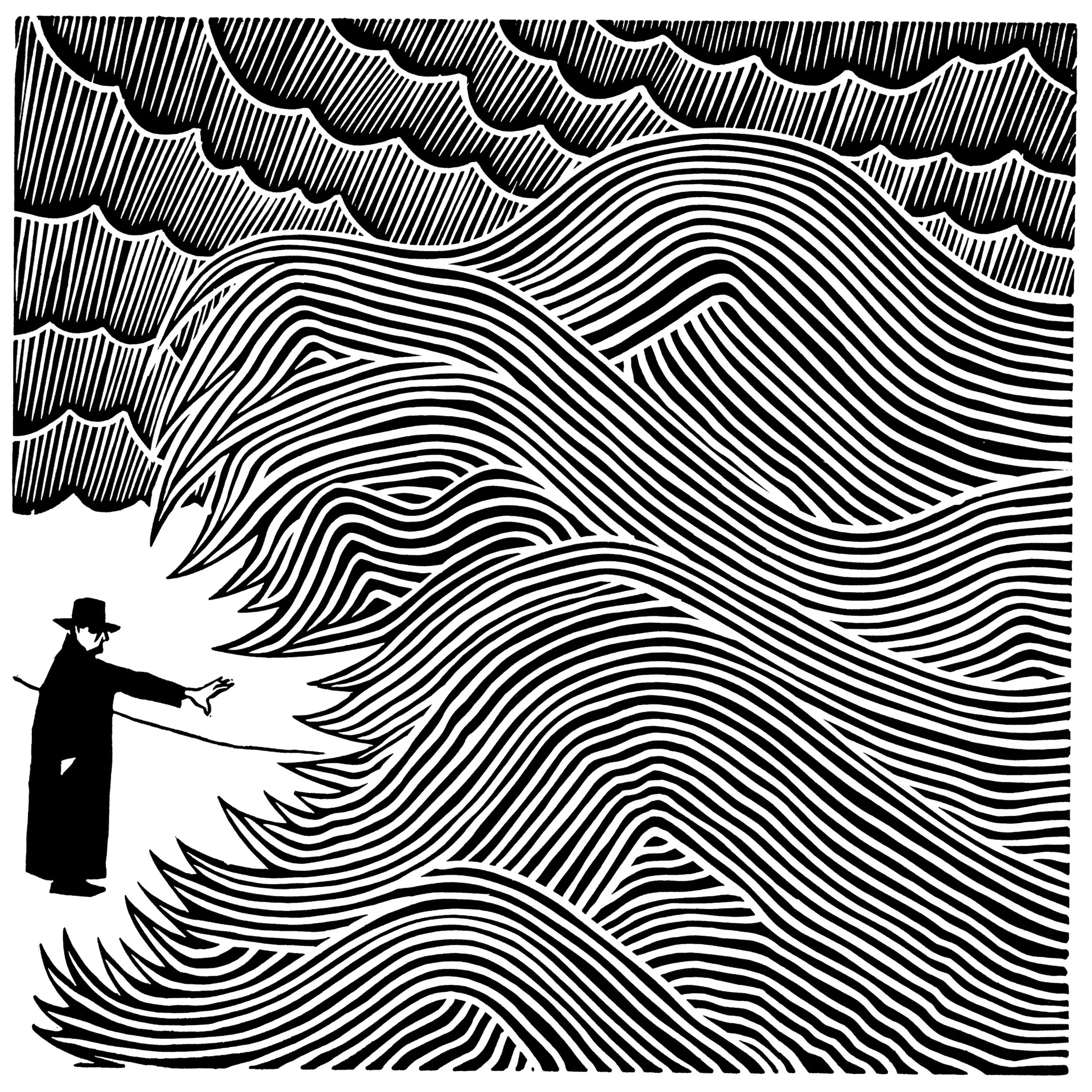
Cnut, 2005
自然の中で感じる不穏な気配
A subtle unease in nature
- まずは、簡単な生い立ちについてお伺いさせてください。子ども時代に過ごした環境が、現在の作品に影響を与えていると感じることはありますか?
- To begin, could you tell us a bit about your early life? Do you feel that the environment you grew up in has influenced the work you create today?
イングランド南部の、急成長した町の郊外にある大きな住宅地で育ちました。そこはかつて農地や果樹園があった場所だったんですが、その面影はほとんど消え去っていて、いくつかの家の裏庭にリンゴの木がぽつんと残っているくらいでした。育つには良い環境で、大人が介入してこない自由や時間がたくさんありましたね。本を読むことも勧められていました。でも、自分の子ども時代と今の作品が、まっすぐな線で繋がっているかどうかは分かりません。私の作品の多くは、夢や空想、そして悪夢から生まれてますからね。
I grew up in a large housing estate in a suburb of a rapidly growing town in southern England. The housing estate was built over farmland and orchards but most of that was utterly gone, erased, except for some lonely apple trees in the back gardens of some of the houses. It was a good place to grow up, and I had a lot of freedom and a lot of time without adults. I was encouraged to read books. But I don’t know if there could be a direct line drawn between my childhood and the artwork I make. So much is from dreams, fantasies and nightmares.
- あなたの作品にはよく自然がモチーフとして登場しますが、その描写は美しさを讃えるというよりかは、どこか不穏な空気が漂っているように感じられます。あなたにとって、“自然”とはどのような存在ですか?
- Nature often appears as a motif in your work, but its depiction seems to carry a somewhat unsettling atmosphere rather than simply celebrating its beauty. How do you perceive “nature” in your own understanding?
私は自然に対して、どこか曖昧な態度をもっています。もっと正確に言うと、自然の中での人間の立ち位置や、私たちという種が自然の中でどう存在しているのか、ということに対してです。現代の人間は自然とちょっと奇妙な関係をもっています。“自然”や“自然界”を大切に思いながらも、一方でそれをどんどん速く、徹底的に破壊しています。
10年くらい前、森や木々、林などをテーマに作品をたくさん描いていた頃、『白雪姫』や『ヘンゼルとグレーテル』などのヨーロッパの民話にとても興味をもちました。これらは道徳を説く寓話としても読めますが、同時に、野生や闇、そして究極的には自然そのものに対する、昔からの深い不安を表現しているとも言えます。森の中にひとりっきりでいて、空が暗くなり始め、木々の中から奇妙な音が聞こえてくる、そんな時に感じる感覚は、とても古くからのものです。ヨーロッパの空想上のモンスターたちは、森から生まれているんです。
だから私はこうした複雑な感情を抱えています。もちろん自然を守り、大切にするために努力すべきですが、同時に、自分たちが矛盾した感情を抱えていることも認める必要があります。自然を守れ! でも、自然は怖い!
I have a somewhat ambivalent attitude to nature; or, more specifically, to humanity’s place in nature and how we as a species exist within it. Modern humans have quite a strange relationship with nature. We love ‘nature’ and ‘the natural world’ but at the same time are destroying it ever more quickly and comprehensively.
When I was making a lot of pictures that were broadly about forests, trees, and woodlands about ten years ago, I became very interested in the folk tales of Europe, stories like Snow White or Hansel and Gretel, which can be seen as little fables about morality, but also express a deep and ancient unease with the idea of wildness, of darkness, and ultimately with nature itself. The feeling you have, if you are alone in a forest, the sky is beginning to darken and there are strange sounds from somewhere unseen within the trees, that feeling is very old. The monsters in the European imagination, they are from the forests.
So I have these different feelings. Yes, we must work to save and care for the natural world, but recognise that we have conflicting attitudes. Save nature! Nature is scary!
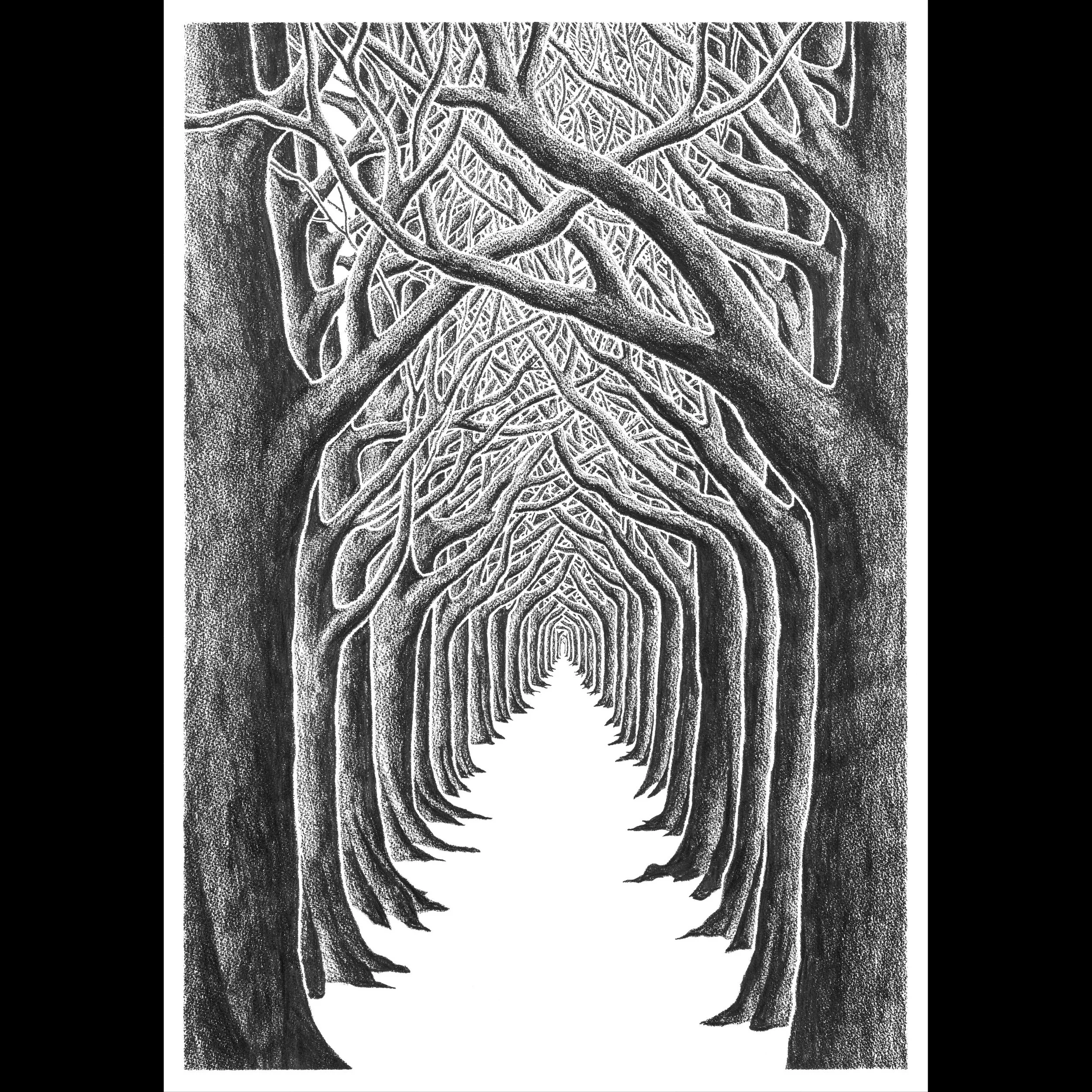
Fifth Avenue, 2014
- “自然”という話でいうと、大学時代にはツリーサージェリー(樹木管理)の仕事をしていたそうですね。
- On the topic of “nature,” I heard that you worked in tree surgery when you were at university.
それまでの人生をずっと教育に費やしてきたので、何か違うことをやってみたくなったんです。それにお金も必要だったので、目の前にあった仕事をとりあえずやってみたら、それがたまたま樹木の仕事でした。屋外でいろんな天候の中で働くのは楽しかったですし、当時は若くて体力もあったので、良い仕事でしたね。木のことや肉体労働についてもたくさん学びました。木登りも得意でしたし、薪の割り方も覚えました。ある意味で懐かしい仕事ですが、今はもう年を取りすぎてできませんね。
After spending my entire life up to that point in education I wanted to try something different. And I needed money, so I just took the first work that came my way, which just happened to be tree work. I liked working in the open air, in all kinds of weather, and I was young and strong, so it was a good job. I learned a lot about trees and about manual labour. I was good at climbing trees too, and I learned how to chop wood. I miss it in a way, but I’m too old for it now.
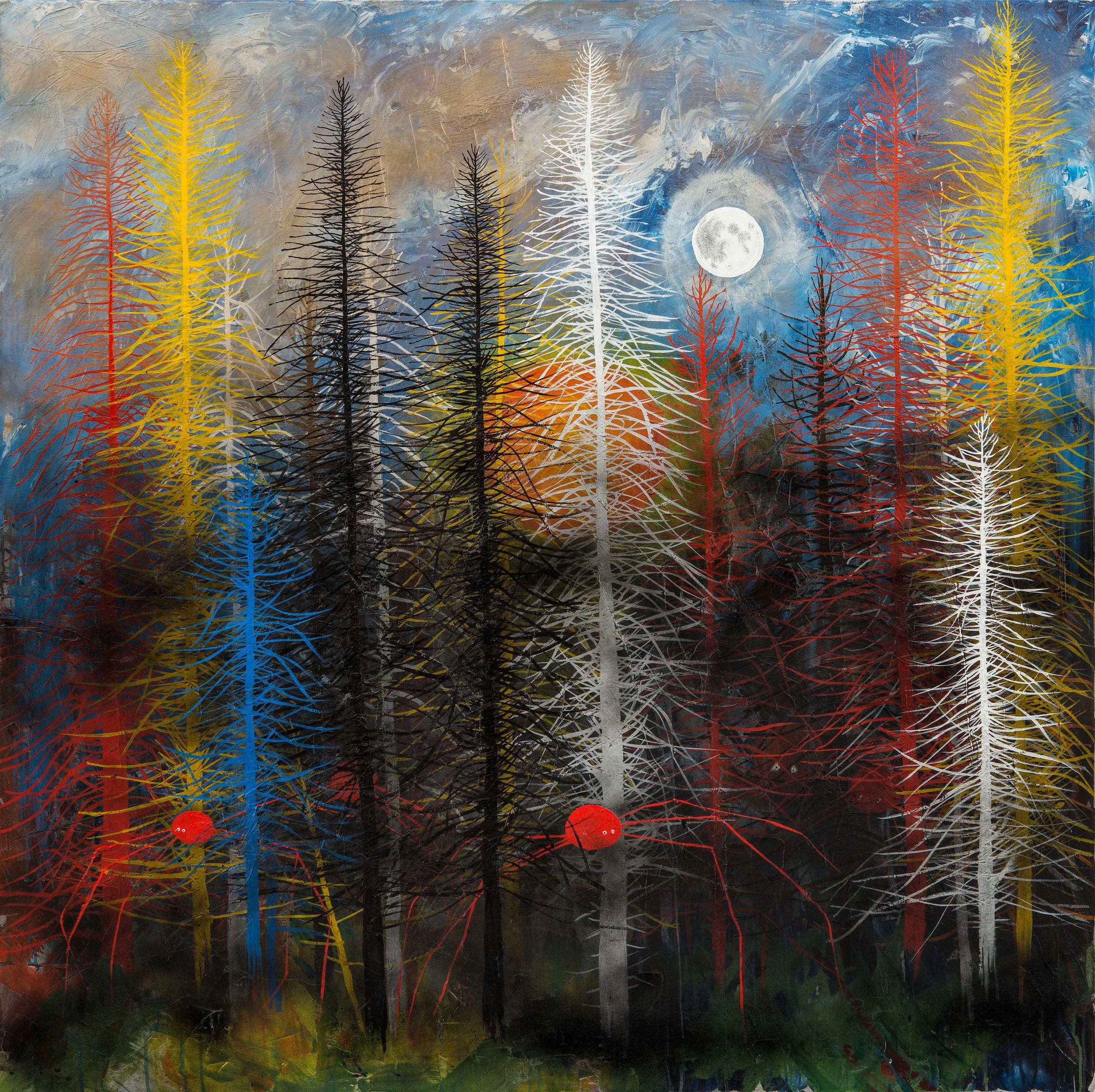
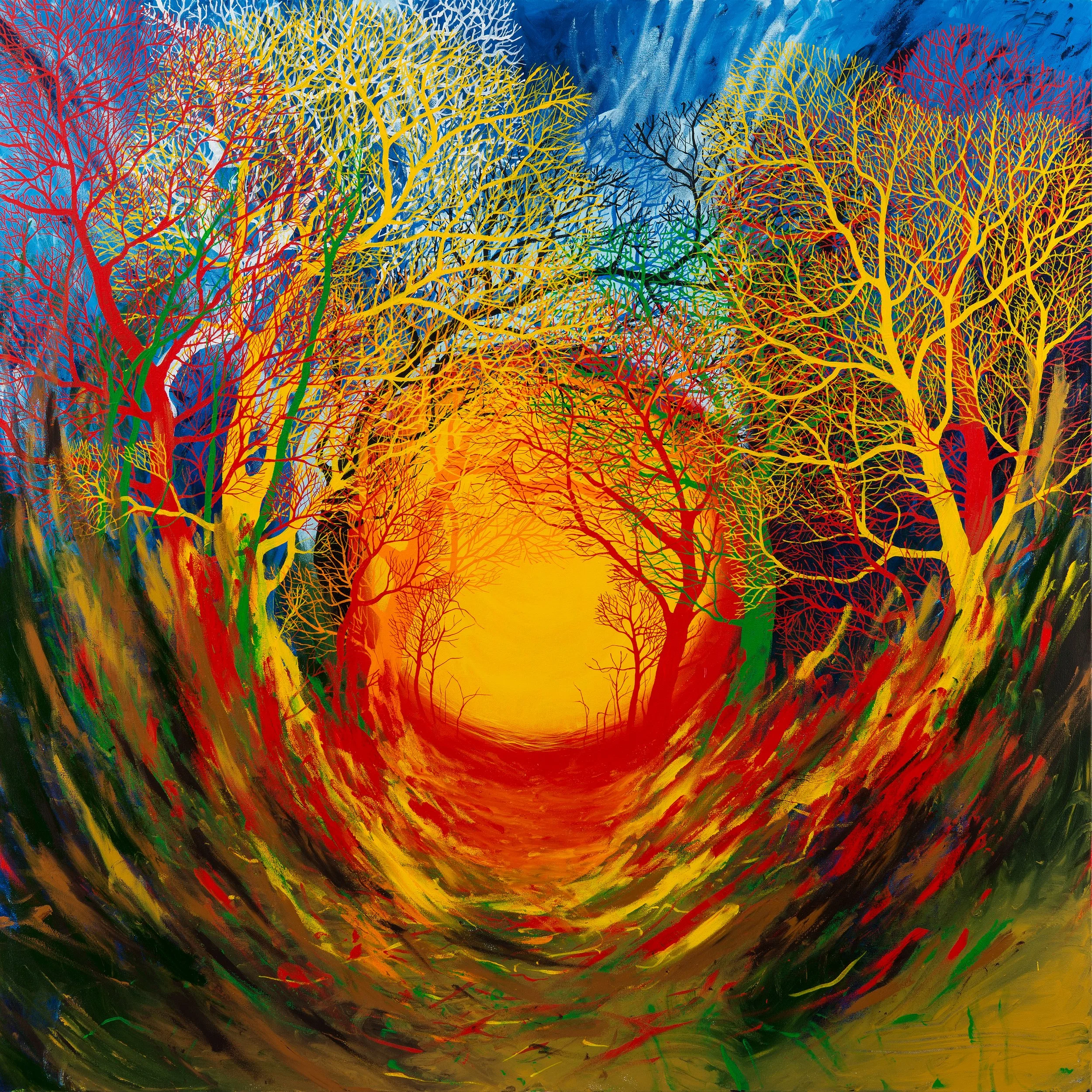
1: Poor End, 2013
2: Nether, 2013
絵が語るストーリーに耳を傾ける
Listen to the story the painting tells.
- Instagramではときどきスケッチをシェアされていますが、スケッチが実際の作品に発展することはあるのでしょうか?
- You sometimes share sketches on Instagram. Do any of these sketches ever develop into finished works?
絵のためにスケッチを描くようなことはほとんどしません。描くとしてもすごく簡単なもので、視覚的なメモや図のような感じで、普段鉛筆やペンで描くドローイングとはだいぶ違います。リノリウムや木を彫るときも同じで、最初に何かを描くことはせず、ただ彫刻刀を手に取ってそのまま削りはじめます。私のドローイングはごく気軽に描くもので、ほとんどの場合それ自体が独立した存在です。ただのドローイングです。絵画や版画作品と同じように、それ自体で完結しているんです。
I very rarely sketch out a painting, and if or when I do the sketches are very rudimentary; these are more like visual notes or diagrams and much less like the pencil or pen drawings that I do. Similarly, when I’m carving linoleum or wood I don’t draw anything out first, I just pick up a chisel and start cutting. My drawings are something I do quite casually and almost all the time they are their own thing; just drawings. Like the paintings, or print work, they are their own selves.
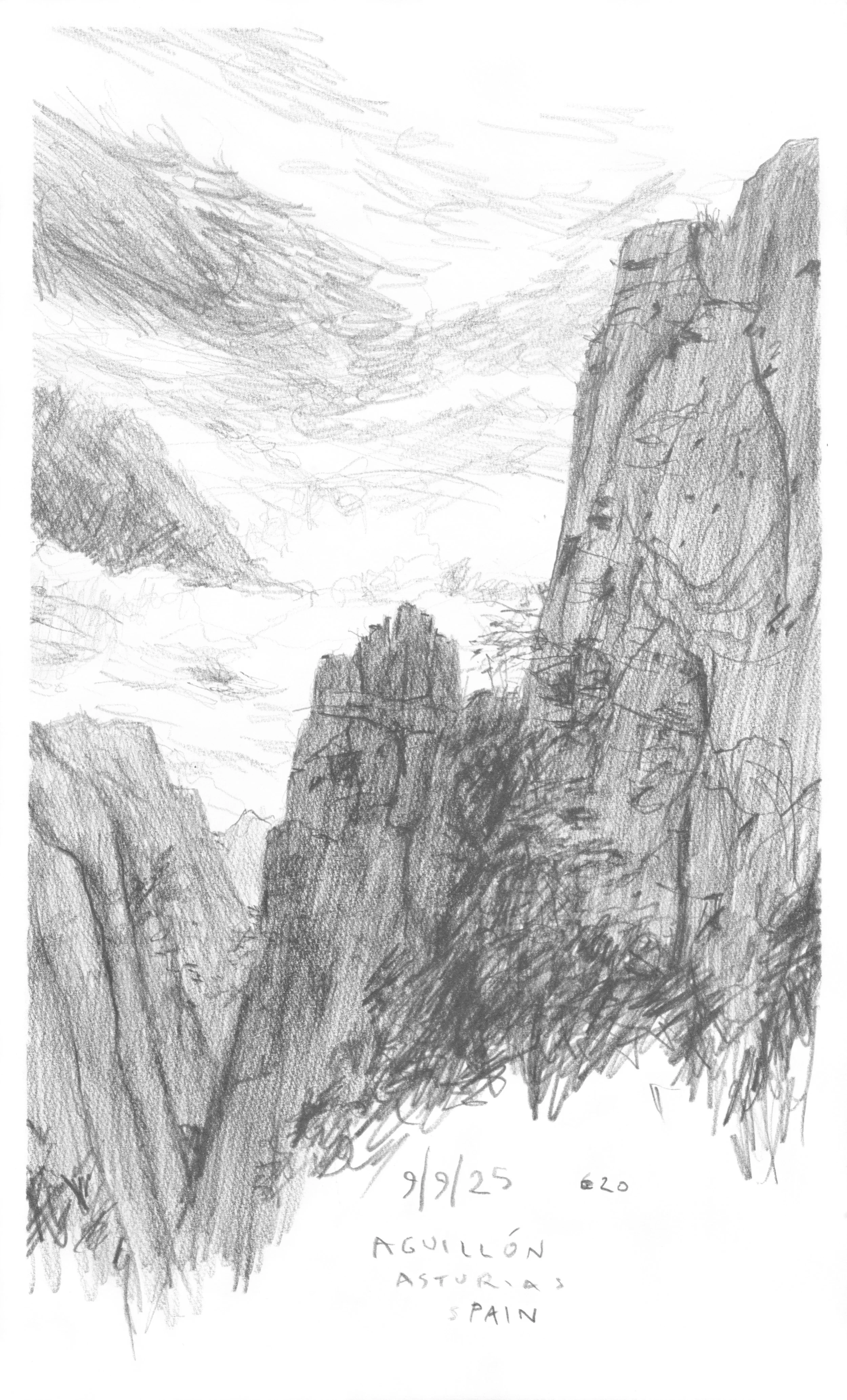
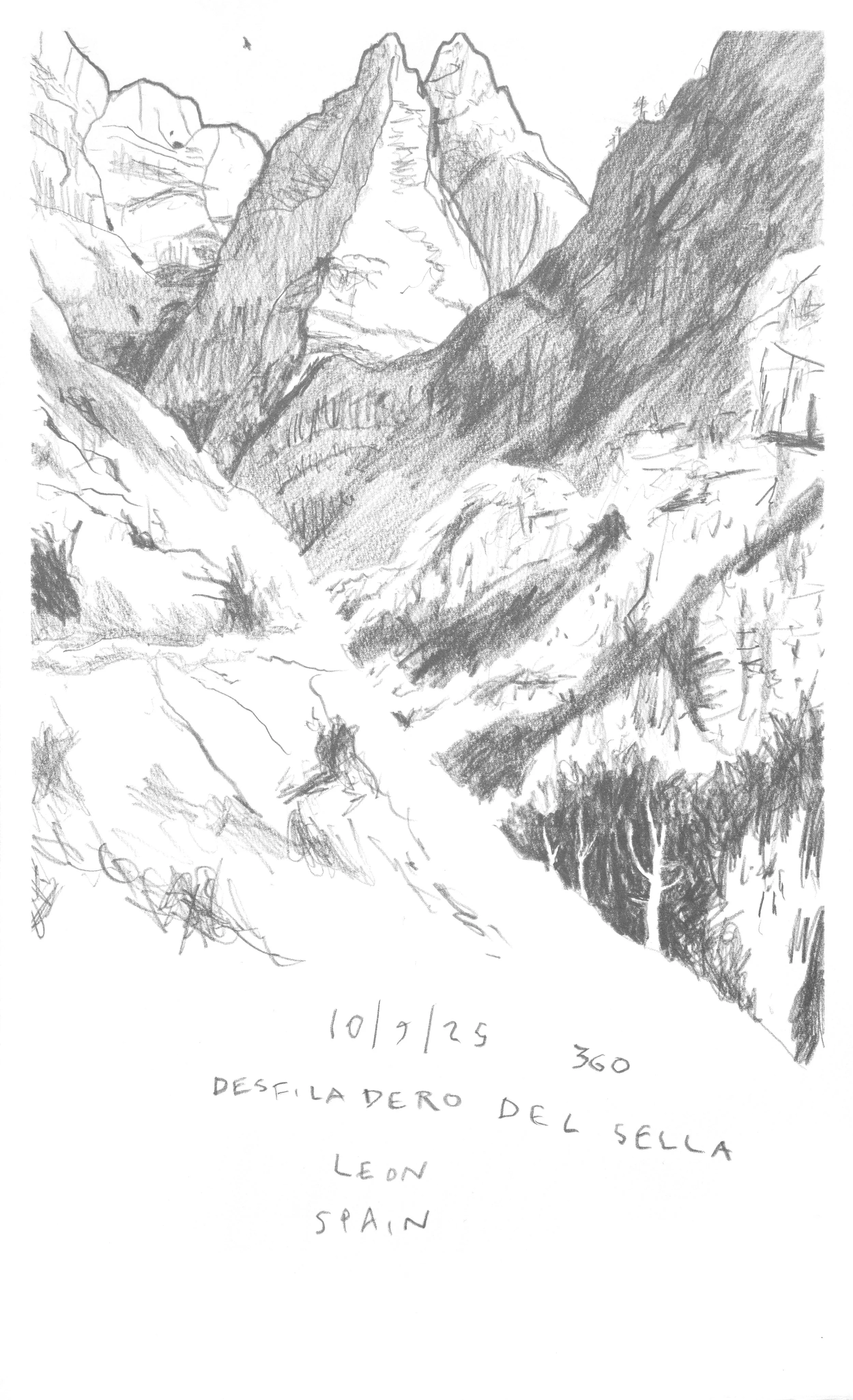
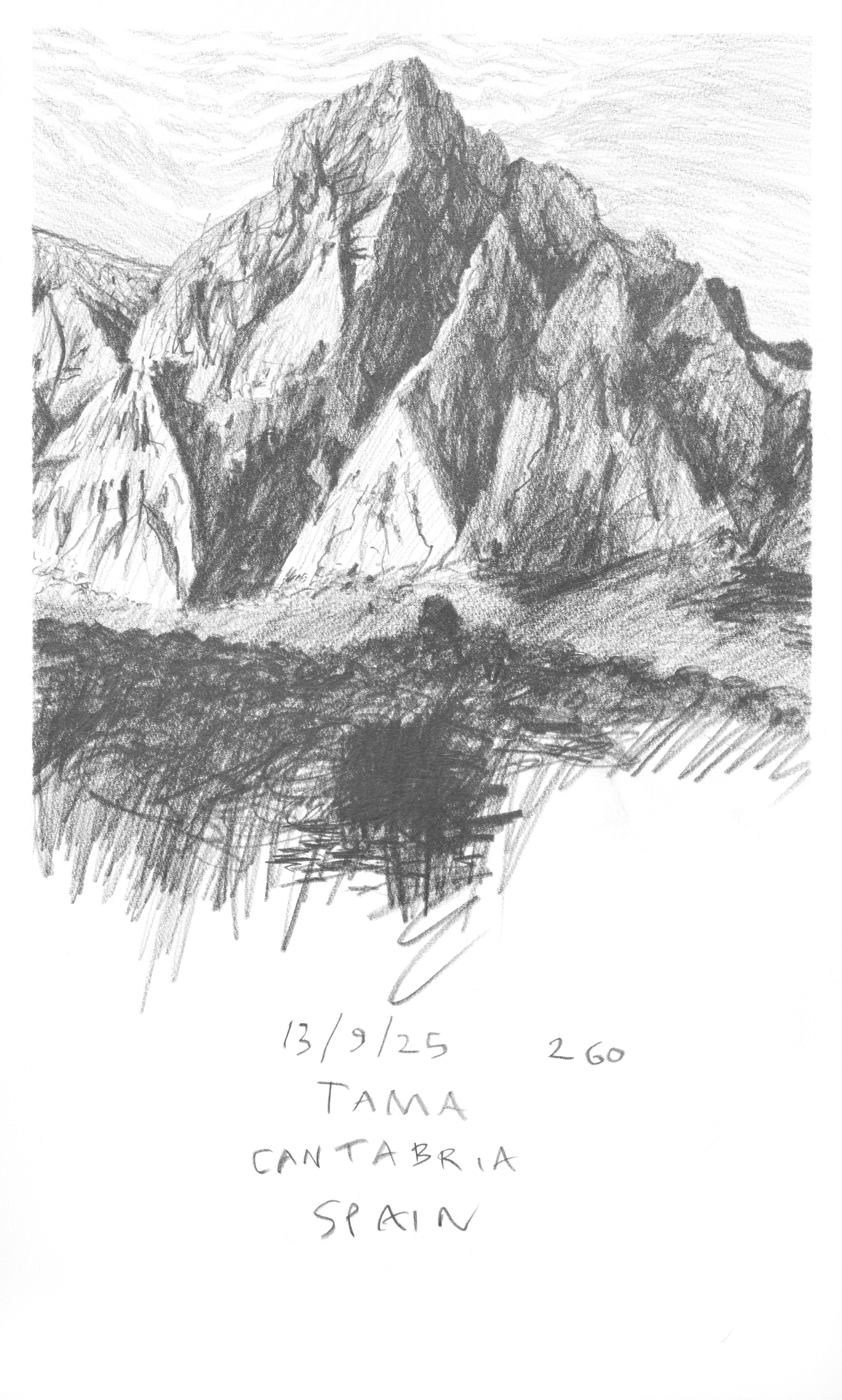
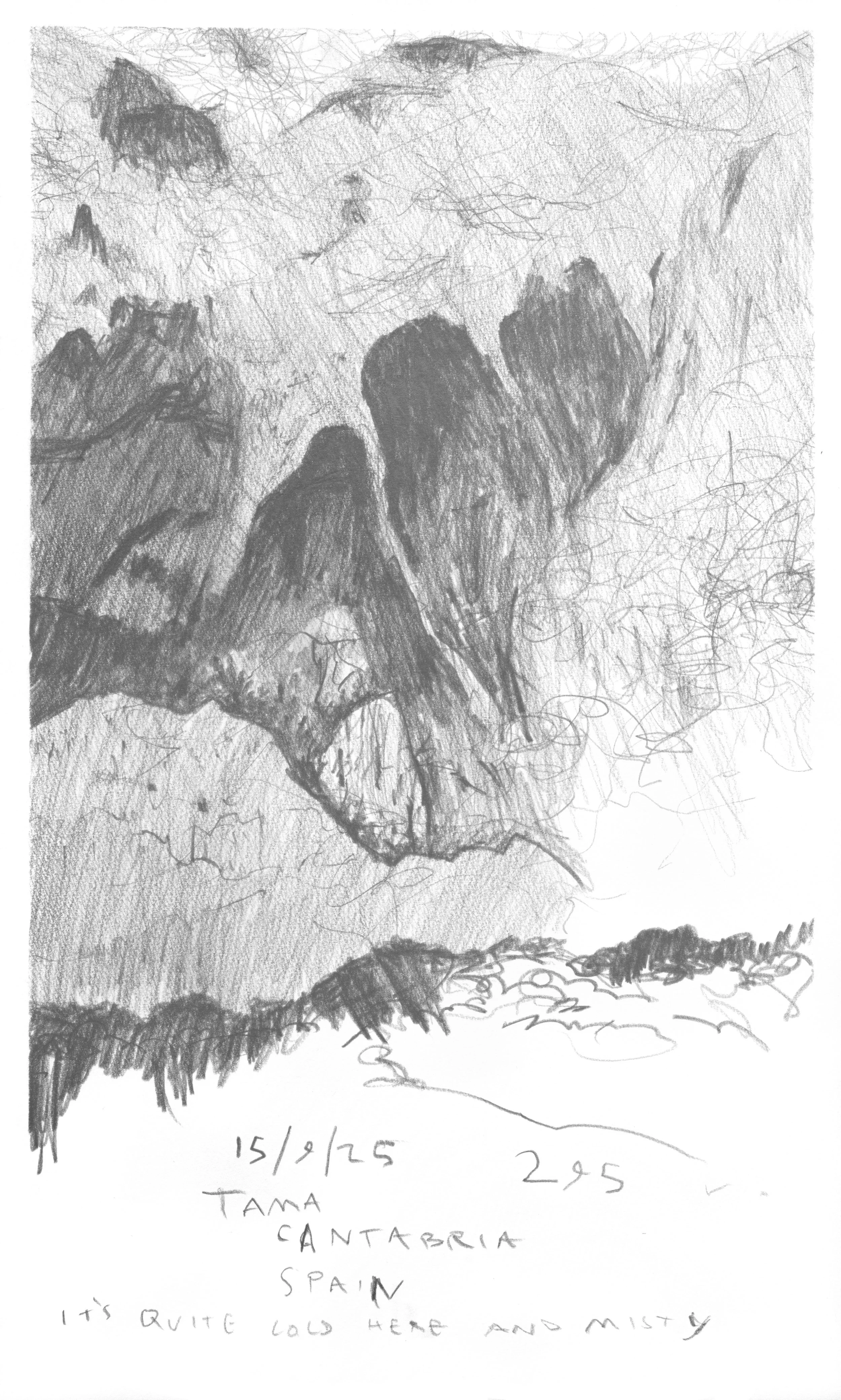
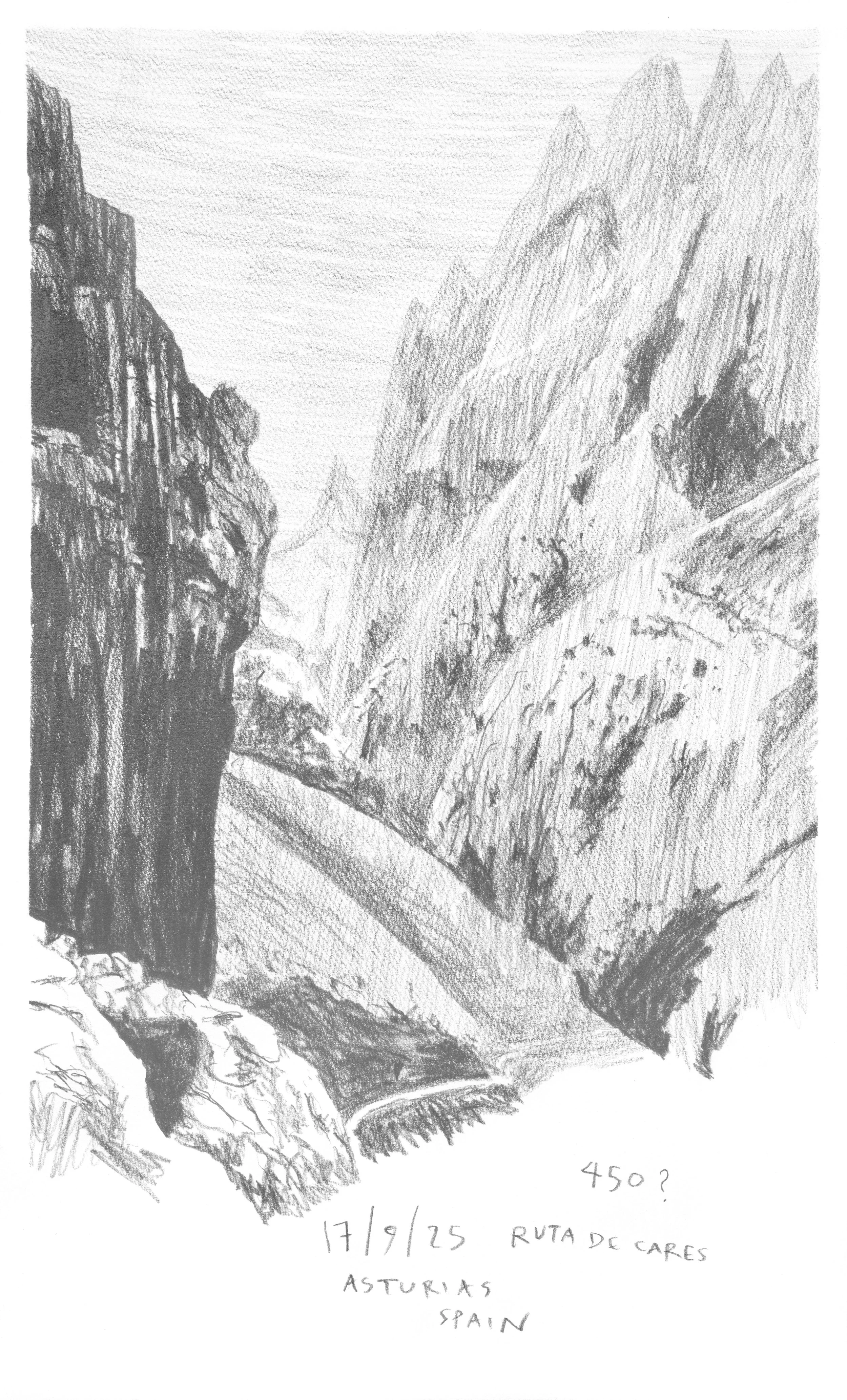
スペインでのハイキング中に描いたドローイング。
Drawings he made during a hike in Spain.
- あなたの作品を見ていると、いくつかの作品が繋がってストーリー性を感じることがあります。作品を制作する際、意識的にストーリーテリングについて考えることはありますか?
- When I look at your work, I sometimes sense a story emerging, as if several pieces are connected. When you create your work, do you consciously think about storytelling?
いいえ、変な話ですが、それが起こらないようにしているんです…でも、普段の意識ではあまりコントロールできないみたいですね。
絵には、自分とは別の意図があると思っています。どこかで読んだのですが、彫刻家の中には、まだ削られていない岩の塊と向き合う時、その中に潜む形が自然と姿を現すのに身を任せる人がいるそうです。私にとって絵画も、それに近い感じです。何を描くか、最初は分かりません。時間が経つにつれて自ら姿を現すもので、私にできるのは舵を取ることだけです。
物語は、絵を描く過程、作品をつくる行為の中から生まれてきます。それはあまり意識的なものではありません。描き進める絵が自らの物語を示してくれるので、私はそれを導くことはできますが、何が起こるかを予測することはできないんです。同じように、絵が完成したことは分かりますが、その瞬間がいつ訪れるかは分かりません。
No, Strangely enough I try to not let that happen… but my everyday normal consciousness seems to have little control over.
The pictures have their own intention, I think. I read somewhere that some sculptors, when they are faced with an unhewn, raw chunk of rock, allow the form within to reveal itself. It’s something like that with painting, for me. I don’t know what I will be painting; it reveals itself over time, and all I can do is steer.
Stories emerge from the process of painting, from the action of making the picture. It’s a less-than-conscious thing. The developing picture suggests its own story, and although I can guide it, I can’t predict what will happen. Similarly, I know when a painting is finished, but not when that event will occur.
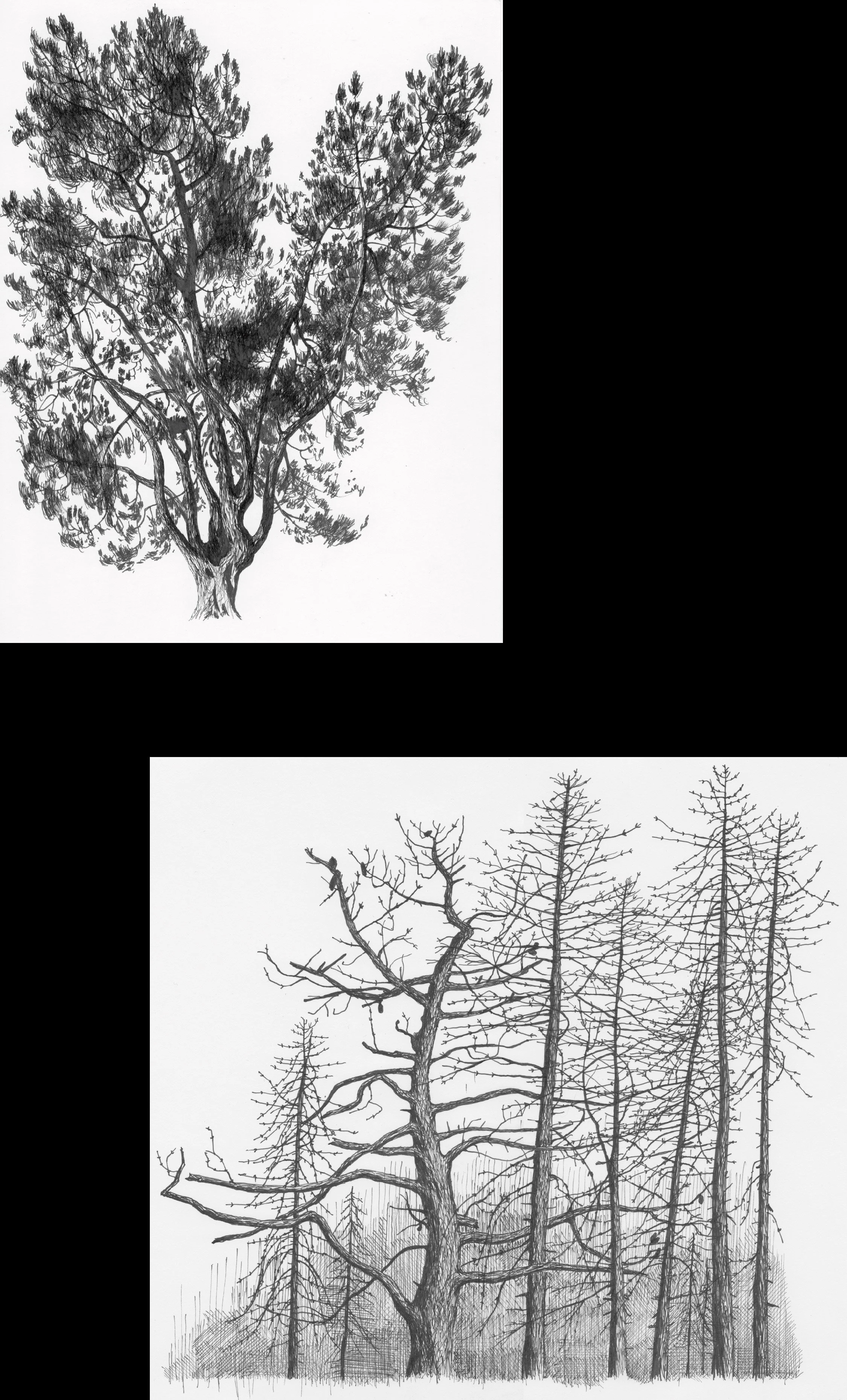
1: Tolkien's Pine, 2021
2: Larch, 2011
- これまで、絵画だけでなく『Slowly Downward』や『Humor』といった文章作品も発表されてきましたが、今後も文章作品に取り組む予定はありますか?
- You’ve published not only paintings but also written works like Slowly Downward and Humor. Do you plan to keep working on writing in the future?
もう長い間、文章はほとんど書いていません。習慣を失ってしまったのかもしれませんし、書きたいという衝動もなくなってしまいました。今の自分にとって、文章を書くということは、どこか懐かしくて、少し憂鬱な感じです。それに、自分の書く文章がどれだけ気が滅入るようなものになってしまうかも心配です。この世界にこれ以上悲しみを増やしたくないですからね。
絵を描くことの方が、文章を書くことよりかは少し楽かもしれません。とはいえ、どちらも以前に比べたら時間がかかるようになってきた気がします。若い頃に比べて、せっかちではなくなり、考えもせず突っ走るようなこともないし、衝動的ではなくなりました。それが良いことなのか悪いことなのかはよく分かりません。まぁ、あまり気にすることでもないかもしれませんね。どうしようもないですし。結局のところ、今は絵を描いたりドローイングしたりする方が楽で、文章を書くのは難しくなっています。
I haven’t written much for a long time now. I think I might have lost the habit; I have certainly lost the compulsion. To me now, at the present moment, the idea of myself writing is quite nostalgic and a little melancholy. And I’m a little worried about how depressing my writing would be; I don’t know that I would want to add more misery to the world.
Making pictures is perhaps a little easier than writing, although both seem to be taking longer than they used to. I think I have become less hasty, less unconsidered, less impulsive than I was in my earlier years, and I’m not really sure if this is a good thing or a bad thing. Perhaps it doesn’t matter. I hope not, as there’s nothing I can do about it. All in all, now I find painting and drawing easier than I used to, and writing is harder.
- 文章作品や作品集など、本という形でも多くの作品を発表されてきましたが、本というフォーマットにどのような価値を感じていますか?
- You’ve published many works in the form of books, including written works and art books. What value do you find in the book as a format?
本が好きなんですよね。スクリーンとかコンピューターはあんまり好きじゃありません。もう二度とコンピューターを使わなくていいなら、本当に嬉しいくらいです。コンピューターって複雑な鉛筆みたいな道具で、膨大な技術の積み重ねや、いろんな素材、工程、産業によって支えられてます。電気がないと動かないし、その電力をつくる仕組みにも依存している。他のコンピューターとやり取りするにもネットワークが必要ですし、そこにはまた複雑で壊れやすい要素が山ほどあるんです。
本はいろんな形で存在できるし、手に取れるというリアリティがあって、物体としての存在感があります。インクがあって、紙があって、製本があって、何らかのカバーがある。本というのは、どこかへ通じる扉であり、入り口であり、喜びが詰まった箱みたいなものですね。
I like books. I dislike screens and computers. If I never needed to use a computer again I would be very pleased. A computer is a tool, like a complicated pencil, and it’s reliant on a huge backstory of technology, many materials, processes and industries. It is reliant on electrical power, and on the generation thereof. To talk to other computers they need a network and all the complex and fragile factors that entails.
A book can exist in many forms and they have a tangible reality, a physical existence; there is ink, paper, binding, a cover of some kind. A book is a portal, a gateway, a box of delights.
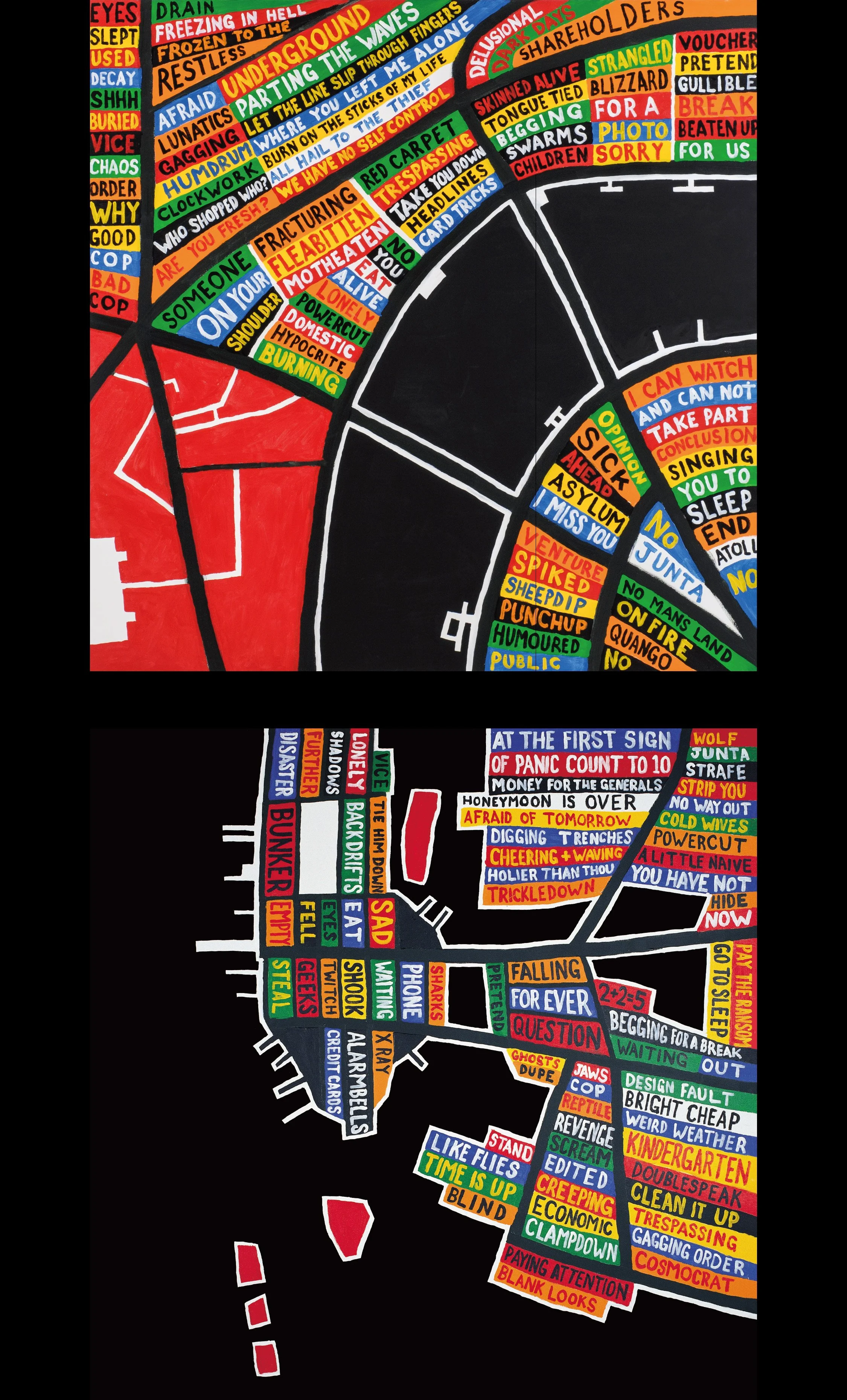
1: London, 2003
2: Manhattan, 2003
Thom Yorkeと交わす創造のダンス
A Creative Dance with Thom Yorke
- 現在、Thom Yorkeとのコラボレーションによる展覧会『This Is What You Get』がアシュモレアン美術館で開催されていますが、簡単に概要についてご紹介いただけますか?
- Your collaborative exhibition with Thom Yorke, THIS IS WHAT YOU GET, is currently on view at the Ashmolean Museum. Could you tell us about the overview of this exhibition?
アシュモレアンでの展覧会は回顧展で、私たちがこの30年間で一緒に制作してきた膨大な量の作品を一堂に集めたものです。絵画、ドローイング、スケッチブック、ノートブックに加えて、Tシャツのデザインや他のグッズなども展示しています。これまでレコードジャケット以外にも、本当にいろんなデザインをやってきましたからね。RadioheadやThomのソロ作品に関しては、ビジュアル面をほぼ自由にやらせてもらってきました。とにかく規模の大きい展覧会で、見どころがたくさんあります。
The exhibition at the Ashmolean is a retrospective, a gathering-together of an enormous amount of work that we have made together over the last thirty years. Paintings, drawings, sketchbooks, notebooks, and also tee shirt designs and other items of merchandise, because over the years we have designed a lot of things besides record sleeves. We have had virtually complete freedom to do as we wish with every visual aspect of Radiohead and Thom’s solo work. It’s a big exhibition with a lot to see.
- Thomと一緒に作品をつくる時は、どのようなコミュニケーションやプロセスで制作しているのでしょうか?
- When you work with Thom, what does your process and communication look like?
すごく控えめで、慎重なダンスみたいなものです。言葉として交わしたり、別の形で共有したり、役に立つかどうかも分からないアイデアや提案を投げ合ったりして成り立つ、とても真剣なダンスです。とにかくたくさんのアイデアを試してみて、これはダメだと確信できるところまでやって、それから手放します。その中にいくつか上手くいくものがあって、それを育てていくんです。でもたまに、上手くいかなかったアイデアの残響みたいなものが残っていることはあって。ほとんど消えかかった失敗の考古学みたいなものですね。成功することの多くは、完全なる偶然であったり、全く予想もしなかったところから生まれることが多い。そういうものが最高なんです。
It is like a very reticent and careful dance, quite a serious dance that is composed of words spoken and otherwise shared, and a throwing together of ideas and suggestions that may or may not be useful. We try out lots of ideas, and work on them until we are sure they will not work, and then they are discarded. A few of the ideas will work, and they are the ones we continue with. But often, echoes of the ideas that don’t work are still there, an almost erased archaeology of mistakes. Many ways of working that are successful are either complete accidents or extremely unlikely and unexpected. These are the best ones.
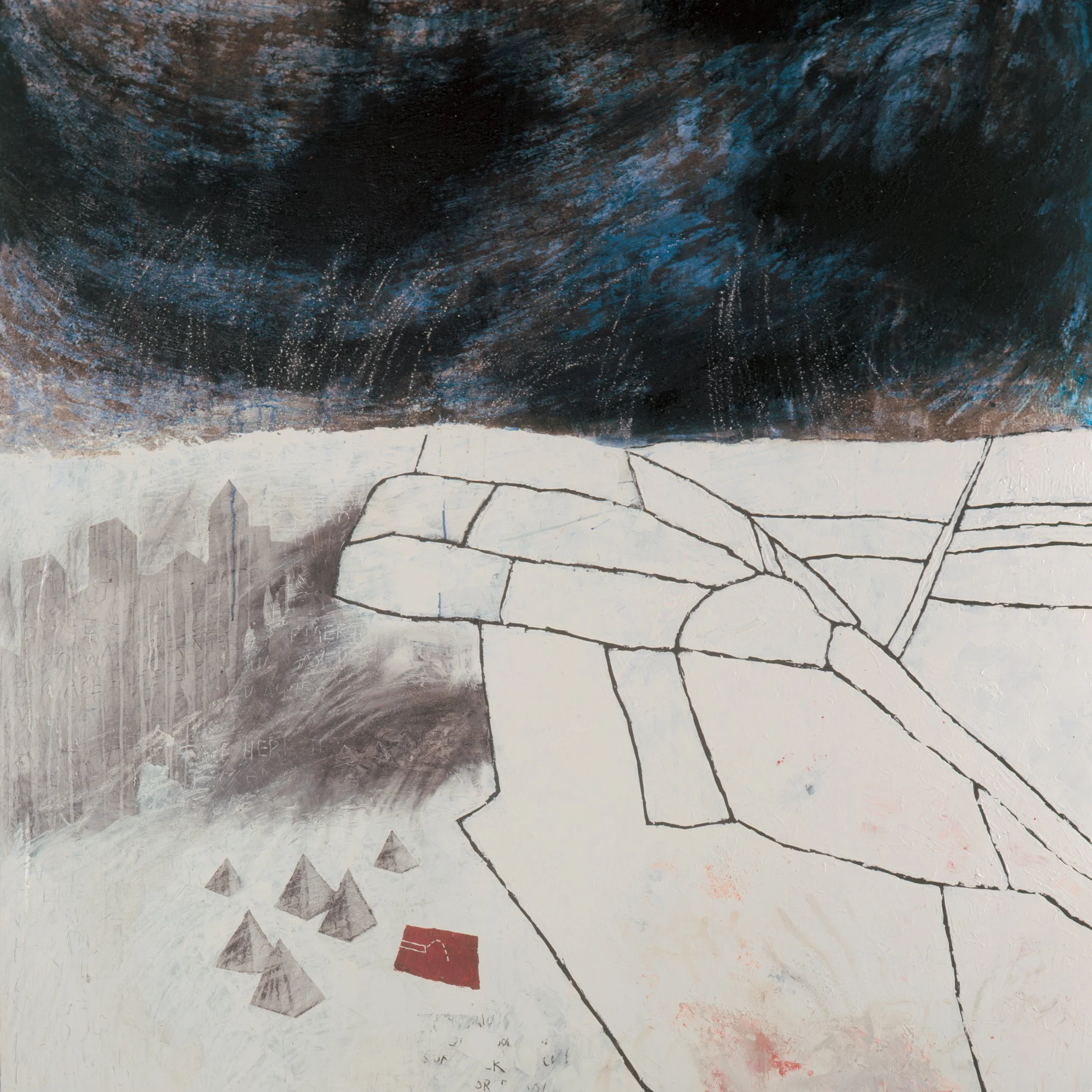
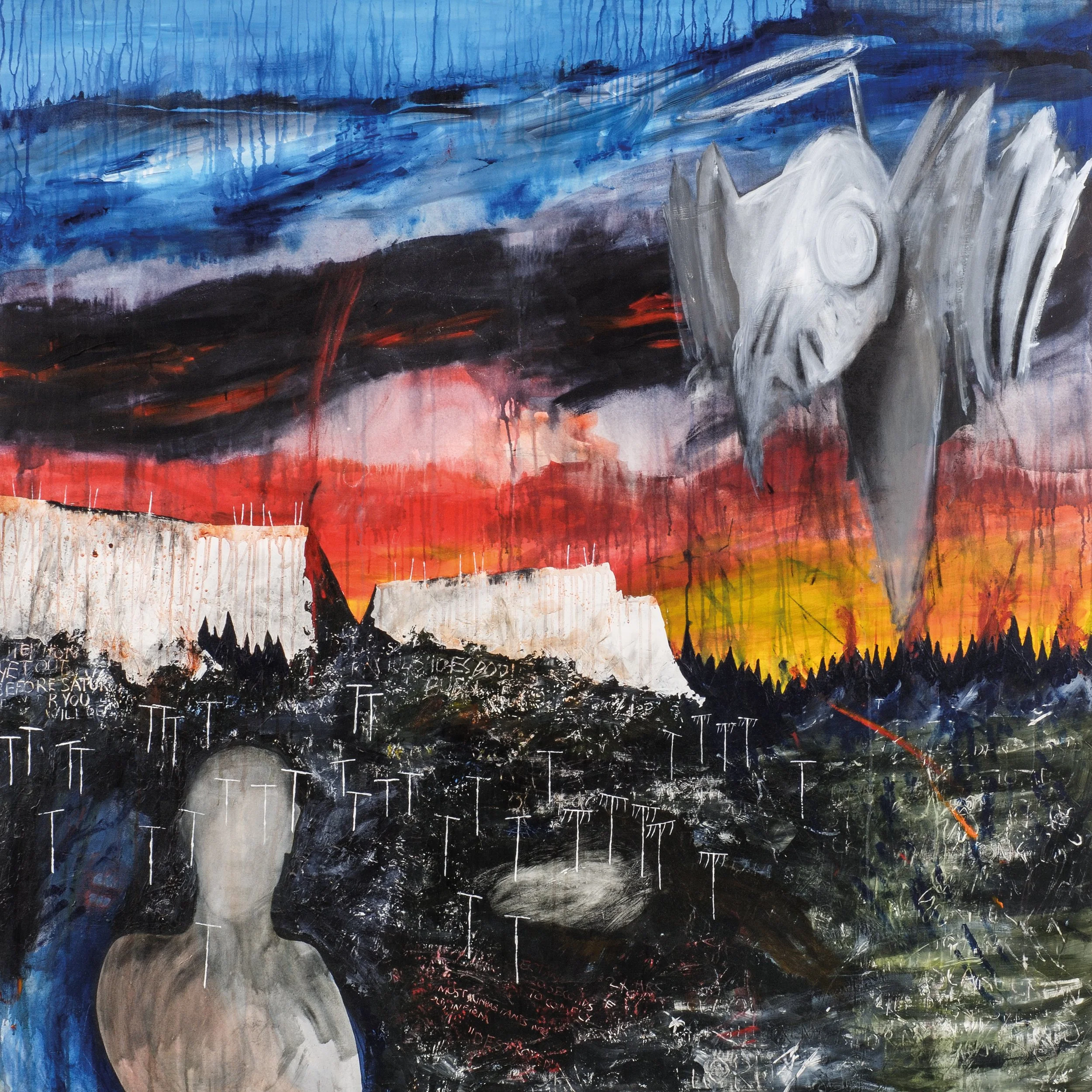
1: Hotels And A Swimming Pool, 2025
2: Get Out Before Saturday, 2025
- 最後に、現在取り組んでいるプロジェクトなどがあれば教えてください。
- Finally, could you tell us about any projects you are currently working on?
ほぼ毎日、絵を描いてますね。それから、The Smileのレコードのアートワークのために、Thomと一緒に取り組んできた作品を、さらに発展させたりもしています。最初は、架空の土地の地図を描くところから始めたんですが、これは15世紀頃のアラビアの航海者や探検家、海賊たちが残した地図に強く影響を受けています。制作を進めるうちに、その絵は地図というよりかは地形図のようになっていって、もはや地図ではなく、私たちの地図を辿った先で出会うかもしれない風景画のようになっていきました。
そして今つくっている絵は、そこからさらに進化して、想像上の建築物をアキシオマティック(公理的)に表現した手法を取り入れ始めています。アキシオマティックな描き方には、西洋風の遠近法や“消失点”の概念がなくて、全てが同じ平面上に存在しています。古代中国の巻物絵の多くがこの技法で描かれていますし、現代の建築図面や“分解図”なんかもそうですね。これをフリーハンドで描くのが、かなり難しいんです!
展覧会ができるぐらいには作品をつくりたいと思っていて、本当は来年の春にヴェネツィアで展示ができたらと考えていたんですが、いろんな理由があって、ちょっと難しそうです。なかなか時間を確保するのが大変なんですよね。でも、やれたらいいなとは思ってます!
I’m painting almost every day, and in some ways I’m continuing to develop the work I’ve been doing with Thom for the artwork to accompany the records he has made with The Smile. This began with painting pictures of maps of imagined lands, very much influenced by Arabic maps made around the 15th Century by navigators, explorers and pirates. As we continued with this work the pictures became less cartographic and more topographic; they ceased to be maps and became landscapes, pictures of where you might find yourself if you followed our maps, perhaps.
And now, in the pictures we’re making now, they have evolved again as we have started to include axiomatic representations of imagined architecture. Axiomatic drawing has no sense of Western-style perspective, no ‘vanishing point’, and so everything is in the same plane. Many ancient Chinese scroll paintings were made using this technique, as are many more modern architectural drawings and ‘exploded diagrams’. It’s quite challenging to paint freehand in this way!
We are hoping to create enough work to hold an exhibition; we hoped to exhibit the work in Venice next Spring, but for many reasons that’s looking unlikely. It’s quite hard to find enough time. But we hope!
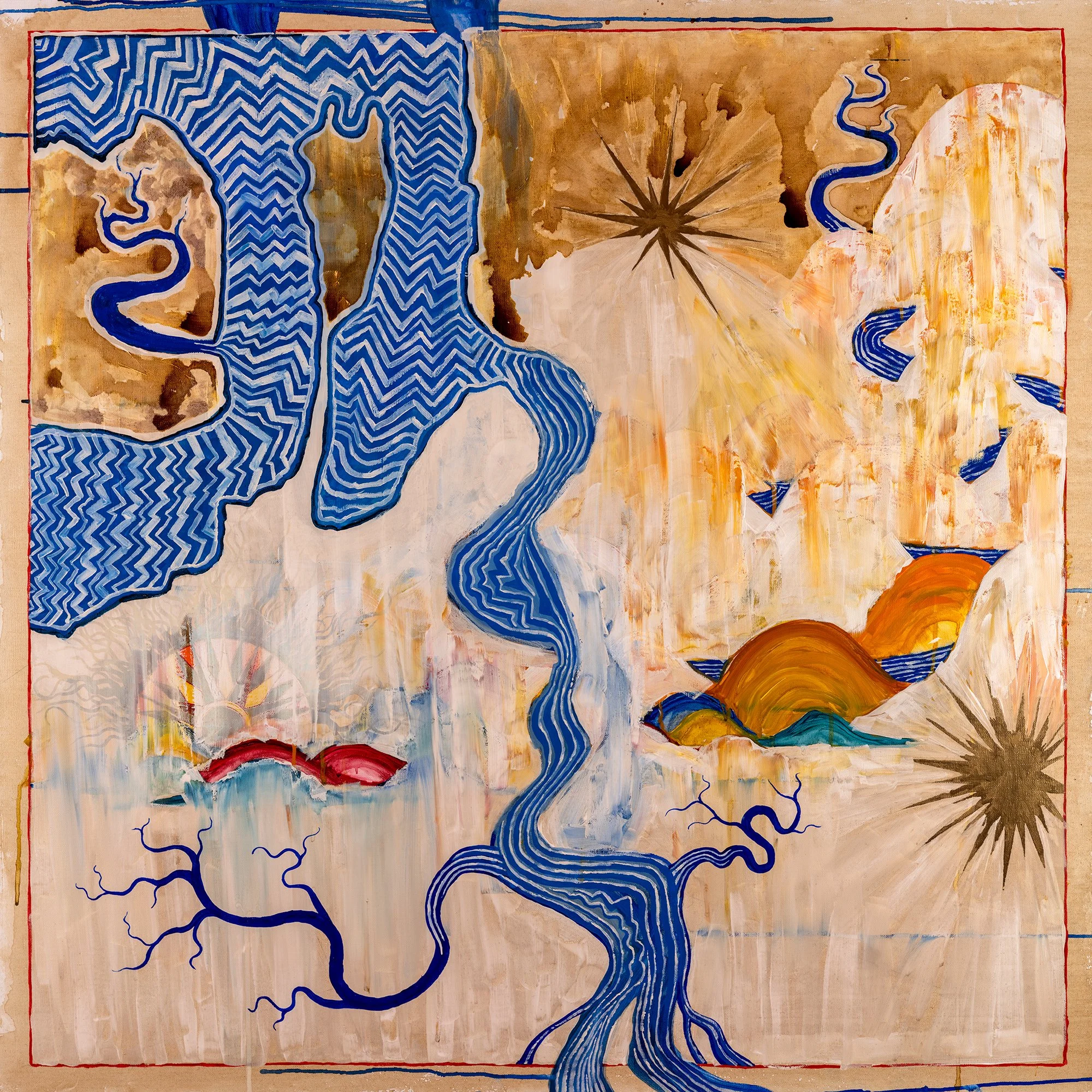
Goom Threads, 2024
Profile
イギリス出身のヴィジュアル・アーティスト、作家。1994年以降、Radioheadのアルバムカバーを手がけ、バンドの独自のヴィジュアル・アイデンティティを築いてきた。2002年以降は、Glastonbury Festivalの公式アートワークも手がけている。文章作品としては、『Slowly Downward』(2005年)や『Humor』(2014年)などがある。現在、オックスフォードのアシュモレアン美術館では、Thom Yorkeと共にこれまで制作してきた作品を一堂に集めた展示『This Is What You Get』が開催されている。
Stanley Donwood is a British visual artist and writer. Since 1994, he has created the album covers for Radiohead, shaping the band’s distinctive visual identity. Since 2002, he has also produced the official artwork for the Glastonbury Festival. His written works include Slowly Downward (2005) and Humor (2014), among others. Currently, the Ashmolean Museum in Oxford is hosting This Is What You Get, an exhibition bringing together the works he has created in collaboration with Thom Yorke.
slowlydownward.co.uk
IG: @stanleydonwood
Edit & Text: Yuki Akiyama